
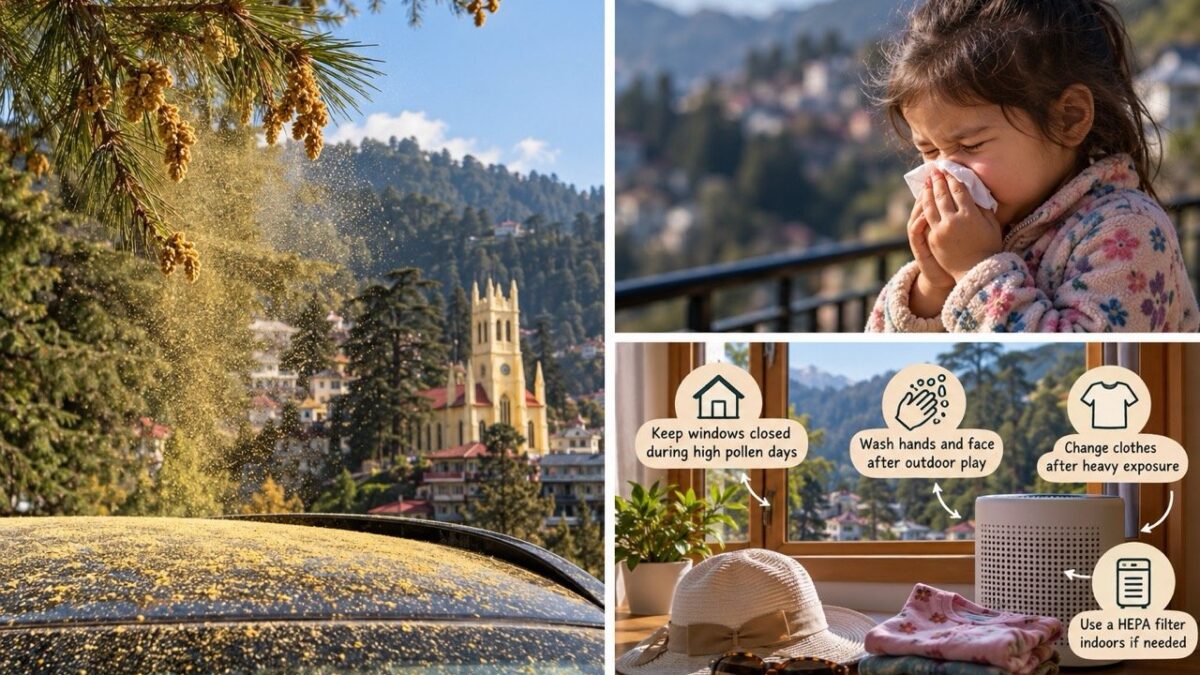
Key points
- Shimla is experiencing a seasonal yellow pollen phenomenon starting the week of September 30 2026.
- The pollen is caused by wind-pollinated trees including deodar, blue pine, spruce and oak.
- The pollen affects people with allergies, causing symptoms such as sneezing and coughing, especially in children.
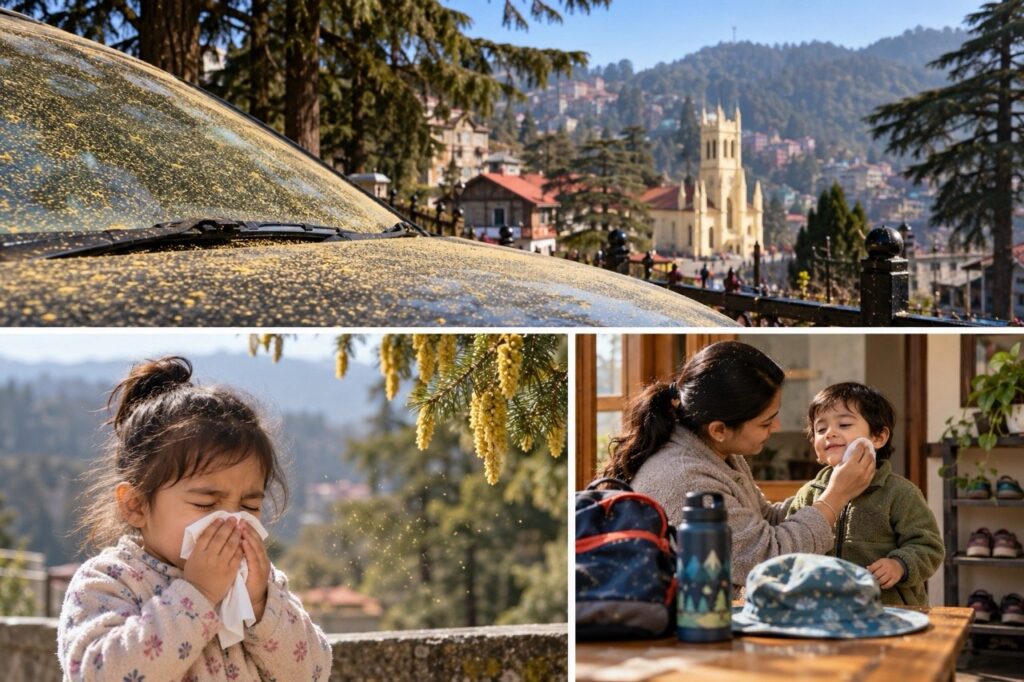
There is a time of year in Shimla when a fine yellow dust seems to appear everywhere. It settles on cars, balconies, window sills, outdoor furniture and roads.
For many of us who live here, it is simply part of the changing seasons. But when you have toddlers at home, you start looking at it differently.
A child who was perfectly fine yesterday may suddenly start sneezing. Their eyes become watery, their nose starts running, or they begin coughing at night. As parents, the first question is often: "Is this because of the pollen?"
The answer can be yes. But there is also plenty of confusion about what pollen is, when it becomes a problem and what we should actually change in our daily routine.
What is pollen?
Pollen is the microscopic reproductive material produced by plants. It is essential for plants to reproduce.
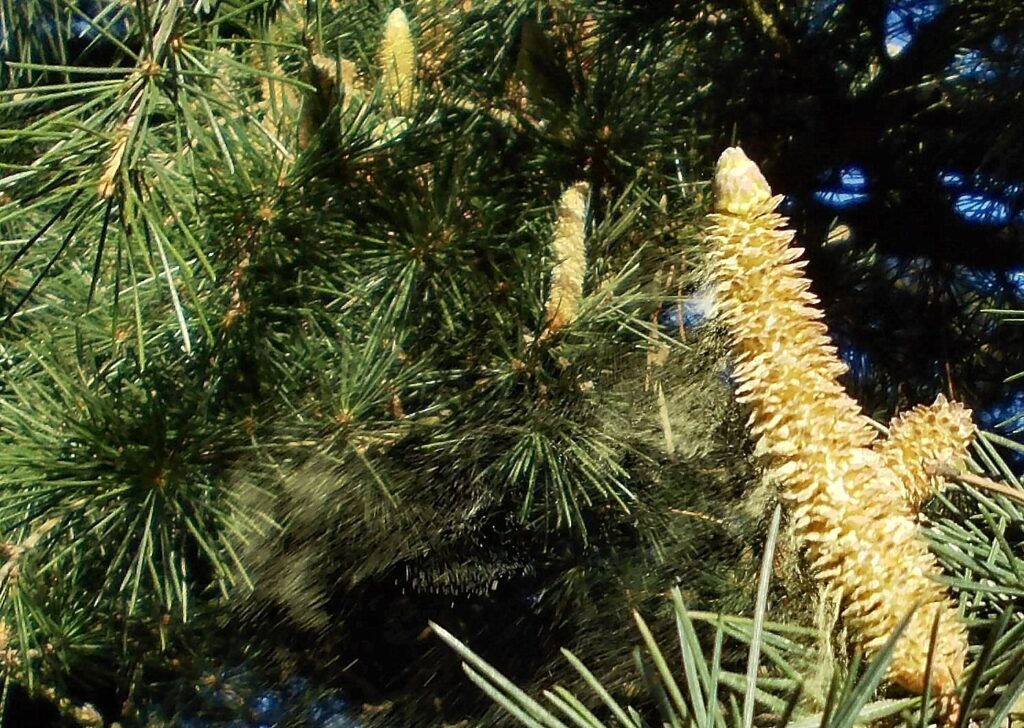
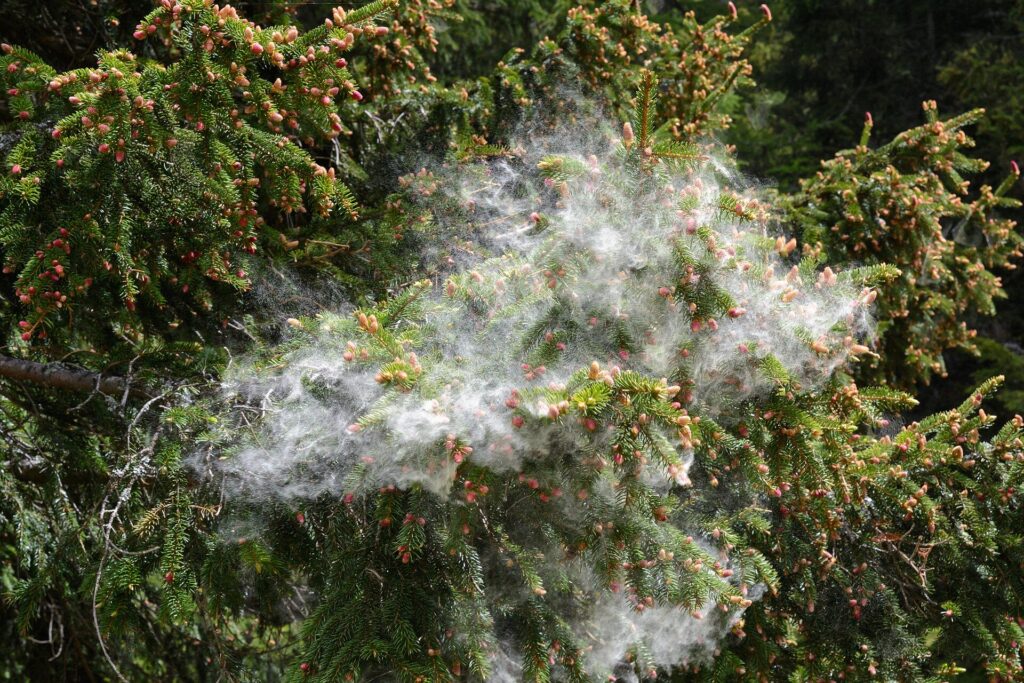
Some plants depend on insects to carry pollen, while others release large quantities of lightweight pollen into the air and rely on wind. These wind-pollinated plants are particularly relevant to allergy sufferers.
Shimla is surrounded by vegetation that produces pollen. Studies around the Shimla Water Catchment Sanctuary and Kufri have identified pollen from deodar, blue pine, spruce, fir, oak, rhododendron and other plants.
So the yellow season isn't pollution being created by the forest. It is, quite simply, part of the natural reproductive cycle of the plants around us.
The problem is that some people—and some children—can react to it.
Why does pollen affect some people?
An allergy occurs when the immune system of a sensitised person mistakenly treats a normally harmless substance as a threat.
This explains why two children can spend the same afternoon outside and have completely different experiences.
One may continue playing without any problem. Another may develop:
- Sneezing
- Runny or blocked nose
- Itchy or watery eyes
- Coughing
- Throat irritation
- Post-nasal drip
- Difficulty sleeping
For children who are sensitive to particular allergens, pollen can also worsen asthma symptoms.
So a high-pollen day doesn't mean every child needs to stay indoors. It means children who show a pattern of pollen-related symptoms may need some additional care.
Is deodar responsible for Shimla's yellow season?
Deodar certainly deserves attention.
Cedrus deodara, the Himalayan cedar, is one of the characteristic trees of the region. Research has found that deodar produces substantial quantities of pollen, and studies have identified its pollen as a potential allergen.
This is an important distinction.
The pollen is completely natural, but "natural" does not automatically mean harmless to everyone. For an allergic person, the problem is the immune response to the pollen.
And it isn't just deodar.
Research from Himachal Pradesh has identified pine and grass pollen among important allergens associated with nasal symptoms, particularly during summer and the rainy season.
That means we shouldn't assume every episode of sneezing in Shimla is caused by the same tree or even by pollen at all.
Why does it sometimes feel worse?
Pollen release and dispersal are affected by weather.
Temperature, humidity, wind and rainfall can all influence how much pollen enters the air and how long it remains airborne.
Research on Himalayan cedar has found a relationship between weather conditions and pollen release, with higher airborne deodar pollen concentrations reported around midday and the afternoon.
This may explain why one day can feel completely different from another.
However, there is no universal "safe pollen hour". Different plants behave differently, and weather conditions change quickly in the hills.
Pollen isn't pollution
When a car is covered in yellow dust, it is easy to think, "Shimla's air is polluted."
Pollen and air pollution are different things.
Pollen is biological material produced by plants. Air pollution includes substances such as particulate matter, nitrogen oxides and ozone.
That doesn't mean pollen is harmless. It can trigger allergies and respiratory symptoms, while air pollution can independently affect respiratory health and interact with allergic disease.
The distinction is important: pollen is natural, but natural does not mean that nobody can react to it.
The positive side of pollen
It is easy to talk about pollen only as a nuisance, but it plays an essential ecological role.
Without pollen, many plants couldn't reproduce. It contributes to seed production, forest regeneration and genetic diversity.
Pollen is also an important nutritional resource for many insects, including bees and other pollinators.
So the trees producing pollen are not doing something harmful. They are doing something essential to the ecosystem.
The same forests that cause seasonal problems for some allergy sufferers also provide habitat, shade, soil protection, biodiversity and many other benefits.
The answer isn't to remove the trees.
The answer is to learn how to live with the seasonal cycle.
What does this mean for parents of toddlers?
This is where the issue becomes practical.
Toddlers touch everything. They play outside, rub their eyes and put their hands near their mouths. They aren't going to remember to wash their hands after playing in pollen.
So instead of trying to completely avoid pollen, it makes more sense to reduce unnecessary exposure when your child is showing symptoms.
- Don't stop outdoor play
This is probably the most important point.
Children in Shimla should still play outside. Exercise, sunlight, fresh air and outdoor activity are important.
If your child isn't experiencing symptoms, there is no reason to treat every sunny day as dangerous.
The goal is exposure management, not keeping children indoors.
- Watch for patterns
Notice when symptoms appear.
Does your child start sneezing after:
- Playing in a particular park?
- Spending a long afternoon outdoors?
- Coming home from school?
- Sleeping with the windows open?
- Being around certain plants?
A simple record of when symptoms occur can be useful. If the pattern keeps repeating, discuss it with your paediatrician.
- Wash hands and face after outdoor play
It's a simple habit but particularly useful with toddlers.
Pollen and other outdoor particles can settle on hands and faces. Washing after outdoor play reduces what gets transferred to the eyes, mouth and indoor surfaces.
- Change clothes after heavy exposure
If your child has spent several hours outside during a particularly pollen-heavy period, changing clothes after coming home can reduce the amount of outdoor material being carried indoors.
- Pay attention to bedroom conditions
If symptoms are worse at night, keep the bedroom particularly clean.
Wash bedding regularly and reduce dust accumulation. For families dealing with significant allergies, a HEPA air purifier may also be worth considering.
- Think about your windows
We love keeping Shimla's windows open.
But if your child consistently develops symptoms when the windows are open during a heavy pollen period, keeping them closed for parts of the day may help.
There is no need to seal the house permanently. It is about finding what works for your child.
- Don't forget the car
Cars parked outdoors can collect considerable amounts of pollen and dust.
If your child spends a lot of time travelling, regularly clean the dashboard and other interior surfaces and maintain the cabin air filtration system.
Common myths
"Local honey will cure pollen allergy."
There is insufficient and inconsistent evidence that ordinary local honey can prevent or cure seasonal pollen allergy. It should not be considered a substitute for proper medical treatment.
Enjoy local honey if you like it, but don't expect it to cure an allergy.
And remember: children under one year should not be given honey because of the risk of infant botulism.
"If it rains, there is no pollen."
Not necessarily.
Rain can temporarily remove pollen from the air, but pollen levels can rise again when conditions become favourable. Thunderstorms can also worsen respiratory symptoms in highly sensitive people under certain conditions.
"All pollen is equally allergenic."
No.
There are many different types of pollen, and a person can be sensitive to one but not another.
This is why identifying the specific allergen can sometimes be much more useful than simply saying, "My child is allergic to pollen."
"Every sneeze is because of pollen."
Definitely not.
Children can sneeze because of pollen, dust, mould, viral infections, pollution or other irritants.
Persistent or severe symptoms shouldn't automatically be blamed on the weather.
"Pollen allergy means weak immunity."
No.
An allergy is an inappropriate immune response to a normally harmless substance. It isn't simply a sign of having a weak immune system.
Does climate change mean Shimla will have more pollen?
Climate change can affect pollen seasons globally. Changes in temperature, rainfall and growing conditions can influence when plants release pollen, how long the season lasts and where allergenic plants grow.
However, we should be careful about saying that Shimla's pollen levels are increasing every year.
We need more long-term, local monitoring to establish that.
A proper Shimla pollen-monitoring system could tell residents:
- Which pollen is dominant each month
- When individual species start releasing pollen
- Which areas have higher concentrations
- Which allergens are most important locally
- Whether pollen seasons are becoming longer or more intense
That would be far more useful than relying on the amount of yellow dust we see on our cars.
So, what should we actually do?
If I were making changes at home because of a toddler's pollen sensitivity, I wouldn't completely change our lifestyle.
I'd make a few small adjustments:
During heavy pollen periods:
- Continue outdoor play if the child feels well.
- Reduce prolonged outdoor exposure if symptoms are already active.
- Wash hands and face after coming home.
- Change clothes after extended outdoor activity.
- Keep bedrooms clean and bedding regularly washed.
- Consider keeping windows closed when pollen exposure is clearly triggering symptoms.
- Clean pollen from cars and frequently touched surfaces.
- Consider HEPA filtration if allergies are significant.
- Speak to a paediatrician if symptoms are persistent or severe.
Most importantly, watch the child rather than just watching the weather.
The bigger picture
Living in Shimla means living close to nature.
We cannot—and shouldn't—try to eliminate everything in nature that occasionally causes discomfort.
The deodar trees aren't the enemy. The pine forests aren't the enemy. Pollen isn't something that Shimla needs to get rid of.
For most people, it is simply part of the natural environment.
For some children and adults, however, particular pollens can trigger genuine allergic symptoms.
The sensible approach is somewhere in the middle:
Understand the seasonal pattern. Recognise your child's triggers. Reduce unnecessary exposure when needed. Get medical advice when symptoms persist. And let children continue enjoying the hills.
After all, the forests that cover Shimla with yellow pollen for a few weeks are also a big part of what makes this place home.
Sources
- Research on pollen diversity in the Shimla Water Catchment Sanctuary and Kufri.
- Research on deodar pollen production and environmental factors affecting pollen release.
- Research identifying Cedrus deodara pollen as an allergen in Himalayan populations.
- Study of seasonal allergens among patients in Himachal Pradesh, including pine and grass pollen.
- CDC information on pollen and respiratory health.
- Evidence regarding honey and seasonal allergies.
- Research on thunderstorms, pollen and asthma.
- WHO information on climate change, air pollution, pollen and health.
This article is for general information and is not a substitute for medical advice. Parents should consult a paediatrician or qualified healthcare professional when a child has persistent, severe or breathing-related symptoms.