
Key points
- A rare Himalayan snow cock was spotted on October 24 at 5,500 metres in the Bagotu region of Pangi sub-division.
- This is the first documented evidence of the bird's presence in Chamba district.
- The Himachal Forest Department has ordered regular patrolling to ensure the bird's conservation and prevent illegal hunting.
A rare Himalayan snow cock was spotted at 5,500 metres in the Bagotu region of Pangi sub-division in Chamba district on October 24.
The Himachal Forest Department has confirmed the presence of the bird, which is the first documented evidence of the species in Chamba district.
Forest guard Tej Singh photographed the bird during routine patrolling under Forest Division Kiladhar.

The Himalayan snow cock, scientifically named Tetraogallus himalayensis, is a large and heavy bird of the pheasant family. It has a stocky body, dense feathers, and grey-white coloring that helps it blend into snowy rocky terrain.
The bird is typically found at altitudes between 3,000 and 5,500 metres. During summers, it inhabits alpine meadows and rocky slopes near the snow line, while seeking shelter in rocky gorges during heavy winter snowfall.
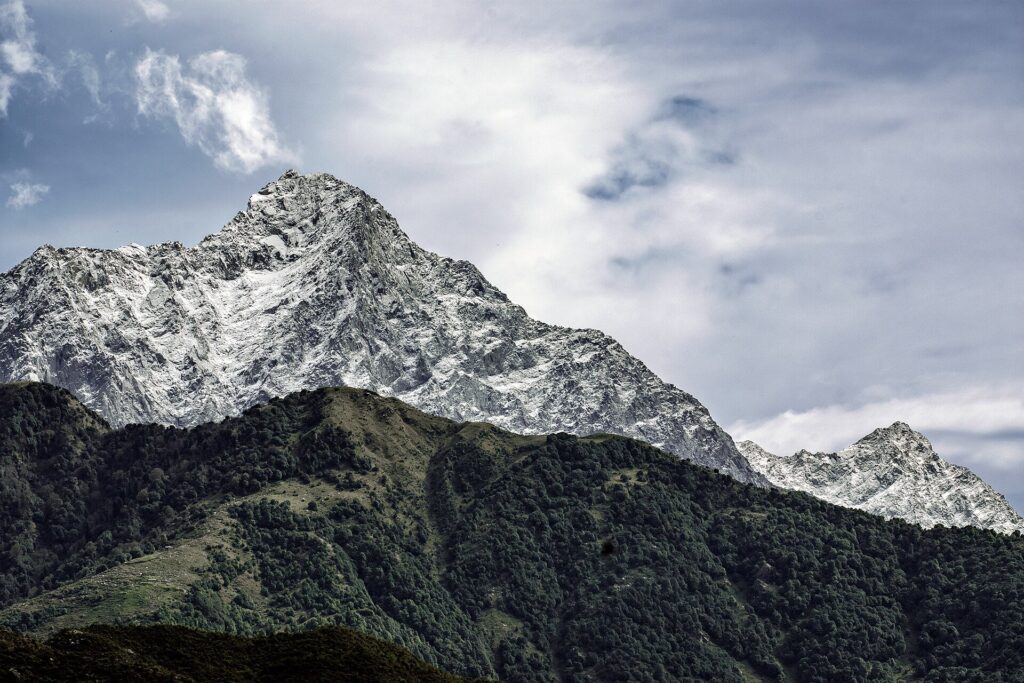
In India, the species is mainly found in Ladakh, Jammu and Kashmir, Uttarakhand, and upper regions of Himachal Pradesh including Lahaul-Spiti, Kinnaur, and Kullu. It is also found in trans-Himalayan ranges such as the Pamir, Tian Shan, Hindu Kush, Karakoram, and the Tibetan Plateau.
The steep rocks and glacial terrain of Bagotu proved favourable for the bird. The species is known to avoid human contact and is rarely seen.
DFO Wild Life Chamba Naw Nath Maane has issued instructions for wildlife conservation. The forest department has directed the beat guard to conduct regular patrolling and remains vigilant to prevent illegal hunting in snowy regions.