
Key points
- Baddi's AQI dropped to 104 on Diwali but rose to 208 by Monday evening.
- Ozone was the main pollutant on Diwali, while PM2.5 and PM10 levels remained high.
- AQI in other Himachal Pradesh towns like Shimla and Manali remained significantly lower.
The air quality index (AQI) in Baddi in Solan district fluctuated sharply around Diwali. The AQI was 224 before the festival and dropped to 104 on Diwali day, against 280 recorded on Diwali last year. The mismatch between pollutant levels and the AQI has put the Central Pollution Control Board's monitoring data under scrutiny.
By Monday evening, the AQI rose to 208 as industrial operations resumed and vehicular emissions increased. On Sunday morning, the AQI in Baddi was 190.
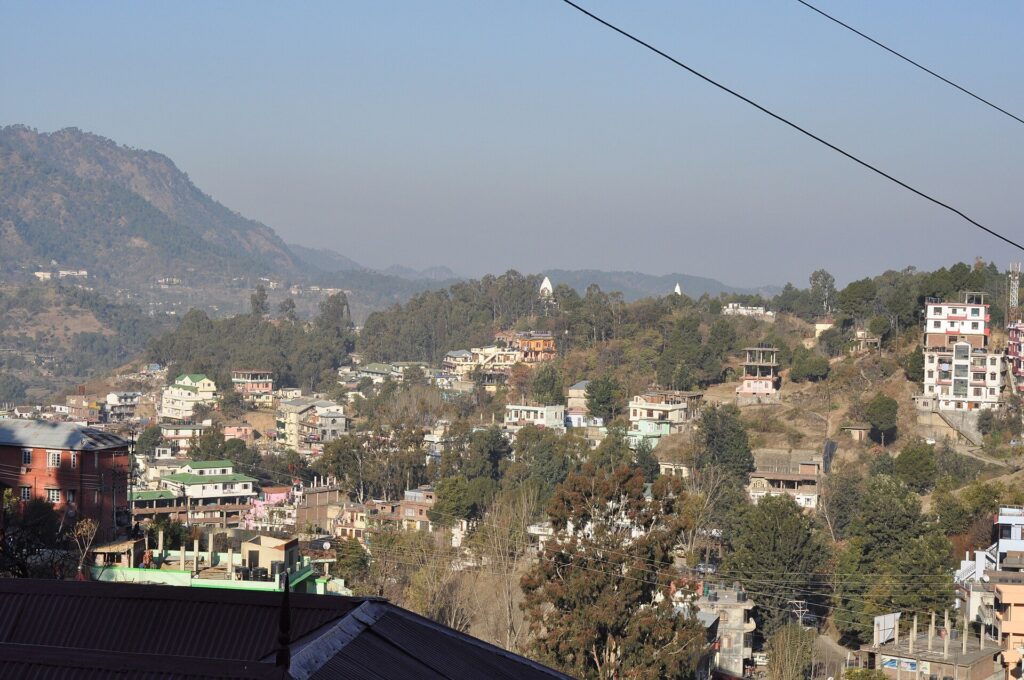
Ozone was identified as the principal pollutant on Diwali. At 9 pm on the festival day, PM2.5 and PM10 concentrations were recorded at 358 g/m and 441 g/m, respectively.
On Tuesday, PM2.5 reached 469 g/m and PM10 reached 407 g/m. The prescribed annual safe limit for PM10 is 60 g/m.
Residents alleged that chemical waste was set ablaze near Sikka Hotel on Diwali, which released thick smoke.
IIT-Kanpur studies identified road dust, vehicular pollution, manufacturing emissions and industrial fuel combustion, including coal and petcoke, as key contributors to the pollution.
In other parts of Himachal Pradesh, AQI was recorded as 115 in Paonta Sahib, 64 in Sundernagar, 86 in Una, 70 in Damtal, 54 in Parwanoo, 80 in Kala Amb, 93 in Barotiwala, 85 in Nalagarh, 37 in Shimla, 45 in Dharamshala and 38 in Manali.